
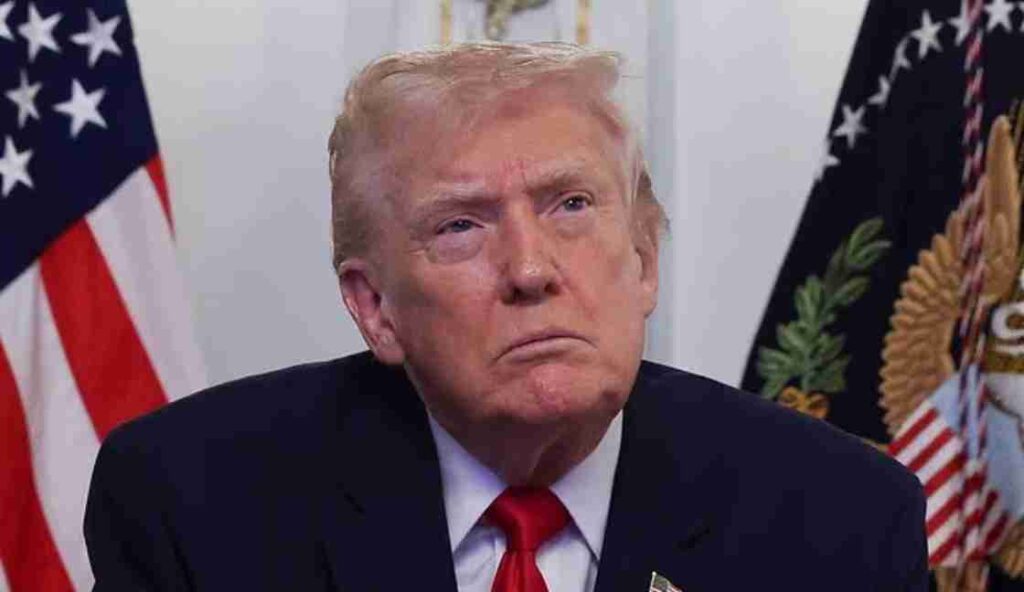
President Donald Trump has released a national security strategy that marks a significant departure from traditional U.S. foreign policy approaches, introducing sweeping changes aligned with his “America First” doctrine.
Europe and Western Identity
The strategy document includes stark warnings about demographic and cultural changes in Europe, suggesting that current migration patterns could fundamentally alter the continent’s character. The administration argues that NATO member states could see dramatic demographic shifts in coming decades.
The paper criticizes what it characterizes as restrictions on free speech and political discourse in European nations, particularly regarding immigration debates. It also announces that NATO will not expand further, a position that affects Ukraine’s longstanding aspirations for membership as it continues to face Russian aggression.
European governments face criticism in the strategy for allegedly impeding efforts to negotiate peace in Ukraine. The document contends that while European populations favor ending the conflict, their governments have not reflected this sentiment in policy decisions.
The strategy advocates for Europe to maintain what it terms “civilisational self-confidence” and move away from heavy regulatory approaches. It pledges U.S. opposition to what the administration views as elite-driven limitations on fundamental liberties across democratic nations.

International Response
Germany responded swiftly to the strategy’s release. Foreign Minister Johann Wadephul acknowledged the United States as Germany’s most important NATO ally while emphasizing that European nations are capable of managing their own internal discussions without external guidance on domestic matters.

Hemisphere Focus and Monroe Doctrine
The document signals a significant reorientation of military priorities, proposing to shift resources away from regions deemed less critical to current U.S. security interests and toward the Western Hemisphere.
In Latin America, the administration plans to assert what it calls a “Trump Corollary” to the historic Monroe Doctrine. This approach reflects recent actions including maritime operations against drug trafficking, interventions in nations like Venezuela, and assertions of interest in strategic assets such as the Panama Canal.
Immigration Policy
Border security receives prominent emphasis, with the strategy declaring that the “era of mass migration must end.” This aligns with the administration’s domestic enforcement actions, which have included high-profile deportation operations since Trump returned to office in January.

Global Positioning
Breaking from post-Cold War approaches, the strategy explicitly rejects the goal of American global domination, though it maintains that the U.S. will prevent other powers from achieving such dominance. The document calls for more selective engagement, avoiding what it terms wasteful commitments to limit the influence of all global powers.
Regional Priorities
Middle East: The strategy suggests reduced focus on the region, noting that increased domestic energy production diminishes America’s historical interest in the oil-rich Gulf. While supporting Israeli security remains a priority, the language is more restrained than in previous policy documents.
Asia-Pacific: On China, the document emphasizes economic competition and reaffirms support for a “free and open” region. Regarding Taiwan, the strategy maintains the longstanding status quo position while calling on Japan and South Korea to increase their contributions to the island’s defense against potential Chinese action.
Africa: The administration plans to move away from aid-centered relationships and what it terms “liberal ideology,” focusing instead on objectives like securing access to critical minerals.
The strategy represents Trump’s most comprehensive articulation of foreign policy priorities since returning to the presidency, signaling potential friction with traditional allies and a fundamental reordering of American global engagement.