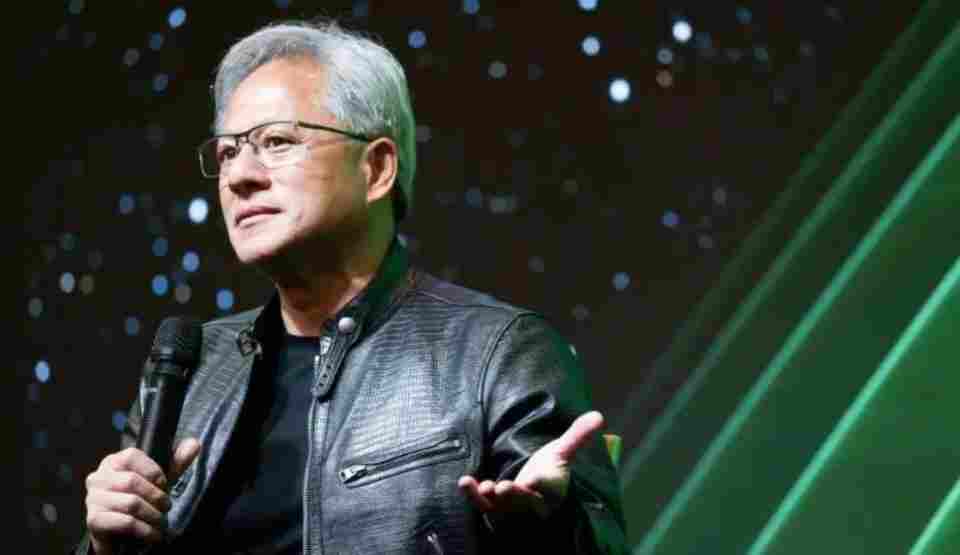
GYEONGJU, South Korea — American semiconductor powerhouse Nvidia has announced sweeping agreements to supply more than 260,000 of its cutting-edge artificial intelligence chips to South Korean government agencies and major corporations, marking a significant expansion of its global AI infrastructure ambitions.
The deals, unveiled Friday at a CEO summit on the sidelines of the Asia Pacific Economic Cooperation forum, will see Samsung, LG, Hyundai, and the South Korean government deploy Nvidia’s advanced processors across factories producing everything from semiconductors and robotics to autonomous vehicles.
“South Korea can now produce intelligence as a new export,” declared Nvidia Chief Executive Jensen Huang, though he declined to disclose the financial terms of the agreements.
The announcement caps an extraordinary week for the Silicon Valley chip designer, which on Wednesday became the first company in history to achieve a $5 trillion valuation. Nvidia’s market momentum continued Thursday with indications of easing tensions in US-China trade relations that could open new export opportunities.
Strategic Push Into Asia
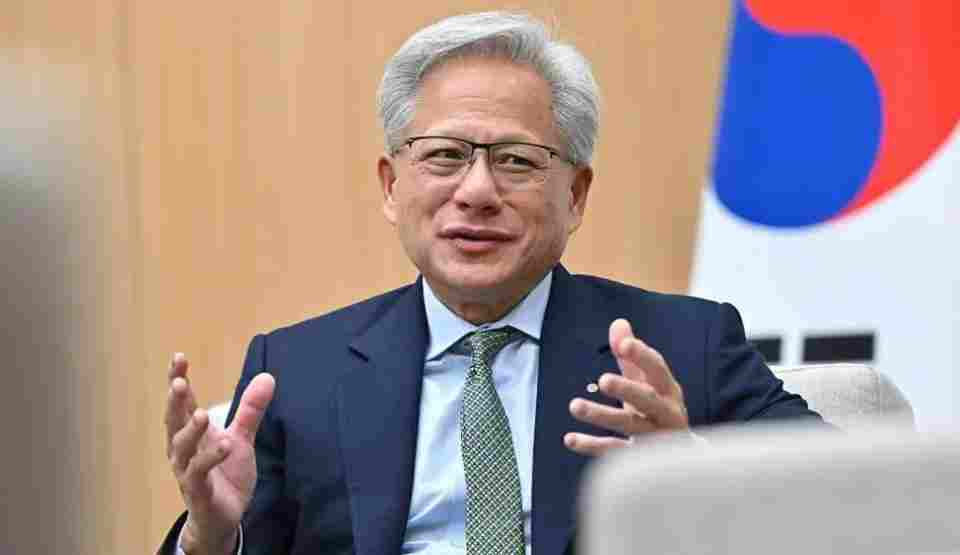
The South Korean partnerships represent Nvidia’s latest move to cement its dominance in the rapidly expanding AI market. More than 50,000 chips will power data centres at South Korea’s National AI Computing Center and facilities operated by tech companies Kakao and Naver, supporting the country’s ambitions to become a regional AI hub.
President Lee Jae Myung has prioritised AI investment since taking office, particularly in response to American tariffs. The government plans to build computing infrastructure under its direct control, an approach known as “sovereign AI.”
Huang emphasized that the chips would enable companies to create “digital twins” with factories worldwide, accelerating automation and efficiency gains across industries.
Caught Between Washington and Beijing
The Asia deals come as Nvidia navigates treacherous geopolitical waters in the intensifying US-China technology rivalry. China accounted for more than a tenth of Nvidia’s revenue last year, but American export restrictions have severely curtailed the company’s access to the world’s second-largest economy.
“We used to have 95% share of the AI business in China. Now we’re at 0% share. And I’m disappointed by that,” Huang said candidly in Gyeongju.
However, a Thursday meeting between Presidents Trump and Xi Jinping offered a glimmer of hope. Trump announced that Beijing would hold discussions with Nvidia about chip sales in China, with Washington serving as a “referee” in the negotiations.
Huang expressed interest in selling Nvidia’s state-of-the-art Blackwell chips to China, though he acknowledged the decision ultimately rests with the American president. US export controls currently prohibit sales of Nvidia’s most advanced AI processors to Chinese buyers.
“It’s in the best interest of America to have the China market and it’s in China’s interest to have an American company bring technology to the country,” Huang argued. “We’d like to see American technology be the global standard.”
Regional Supply Chain Dependencies
The Asia Pacific region remains critical to Nvidia’s business model. As primarily a chip designer, the company outsources most physical production to manufacturers including Samsung, SK Hynix, and Taiwan Semiconductor Manufacturing Company.
TSMC has proven particularly vital, producing Nvidia’s most advanced AI chips, including the flagship Blackwell series. Samsung manufactures components for Nvidia’s H20 chips, scaled-down processors designed for the Chinese market under US export rules.
China Fights Back
American efforts to restrict China’s access to advanced semiconductors have spurred innovation among Chinese competitors. Huawei and Alibaba have both unveiled chips they claim can rival Nvidia’s offerings for domestic customers. Beijing has reportedly instructed local firms to purchase from Chinese chipmakers rather than Nvidia, aiming to bolster its domestic technology sector.
“We respect deeply the capabilities of China,” Huang acknowledged.
Market Confidence Surges
Nvidia’s stock price received additional support this week from a series of new partnerships, including agreements with the US Department of Energy, Nokia, Uber, and automobile manufacturer Stellantis. The deals are designed to reassure investors that massive AI investments will generate substantial returns.
The potential revival of China sales following the Trump-Xi trade discussions provided further momentum to the company’s share price, which has made Nvidia one of the most valuable enterprises in corporate history.