
Indian Prime Minister Narendra Modi welcomed Russian President Vladimir Putin to New Delhi on Friday for high-stakes talks that highlight India’s delicate balancing act between Moscow and the West.
During their meeting, Modi stopped short of condemning Russia’s invasion of Ukraine, instead emphasizing India’s commitment to peace. “India is not neutral – India has a position, and that position is for peace,” Modi stated as the leaders began their discussions. “We support every effort for peace, and we stand shoulder to shoulder with every initiative taken for peace.”
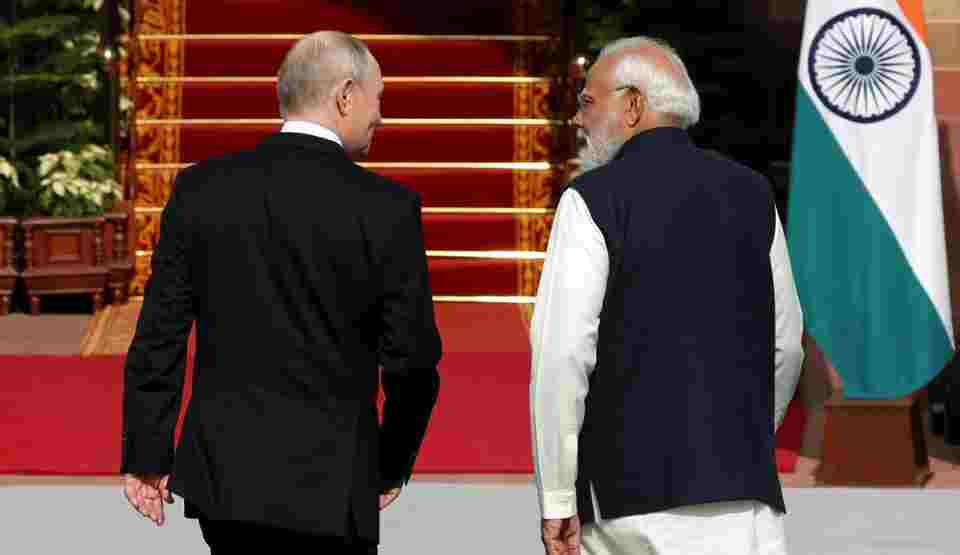
Putin expressed gratitude for Modi’s engagement on the Ukraine conflict, noting they had discussed possible paths toward a peaceful resolution involving multiple partners, including the United States.
The 23rd Russia-India Summit focuses on defense cooperation, energy partnerships, and trade relations. Putin emphasized expanding collaboration in emerging sectors such as high technology, aviation, space exploration, and artificial intelligence, while maintaining strong military-technical cooperation.
India’s continued purchase of discounted Russian oil has drawn criticism from Western allies since the Ukraine war began in February 2022. Washington has warned that these transactions help sustain Moscow’s war effort, with President Donald Trump recently imposing additional 25% tariffs on Indian imports, bringing total duties to 50%.
Modi is expected to press for accelerated delivery of two remaining S-400 surface-to-air missile systems from a 2018 agreement valued at approximately $5 billion. India has received three systems so far, with delays attributed to supply chain disruptions caused by the Ukraine conflict.
The visit has created diplomatic tensions. Three European ambassadors—from Britain, France, and Germany—published a joint editorial criticizing Russia’s military actions, stating that Moscow has launched 22 of the war’s largest air attacks since peace negotiations began. They characterized these strikes as deliberate acts of aggression rather than accidents.
Analysts warn that Putin’s visit could complicate India’s relationships with the European Union and United States, potentially affecting crucial trade agreement negotiations. However, India maintains it follows international sanctions and emphasizes its longstanding partnership with Russia dating back to the Cold War era.
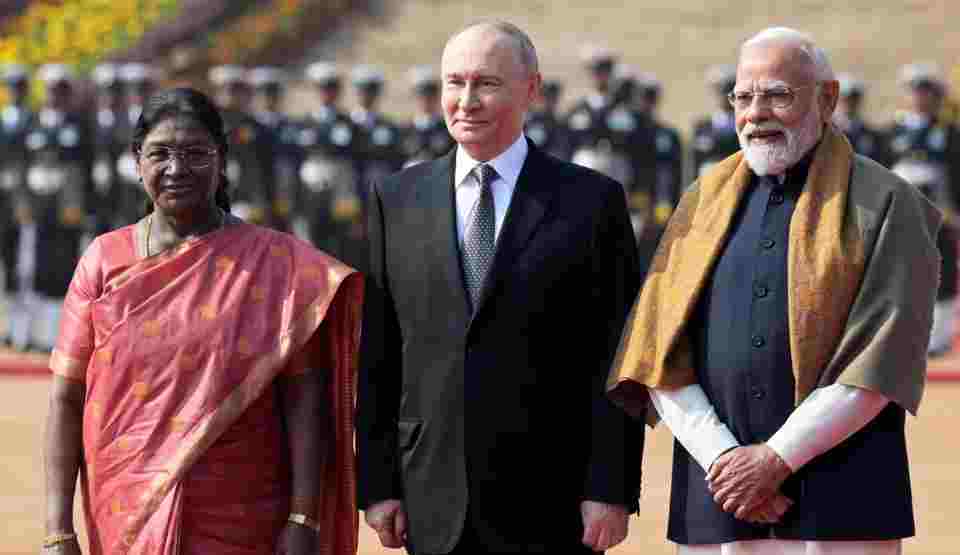
Modi greeted Putin personally at the airport Thursday evening—a rare diplomatic gesture—with what observers described as a warm embrace between old friends. India is not bound by the International Criminal Court’s arrest warrant for Putin, as it is not a signatory to the Rome Statute.
Praveen Donthi, a senior analyst with the International Crisis Group, noted that the visit demonstrates “New Delhi’s strategic tightrope walk between the West and the rest, chiefly Russia,” reflecting India’s complex position as it seeks to maintain both its historical Russian partnership and growing strategic ties with the United States.