
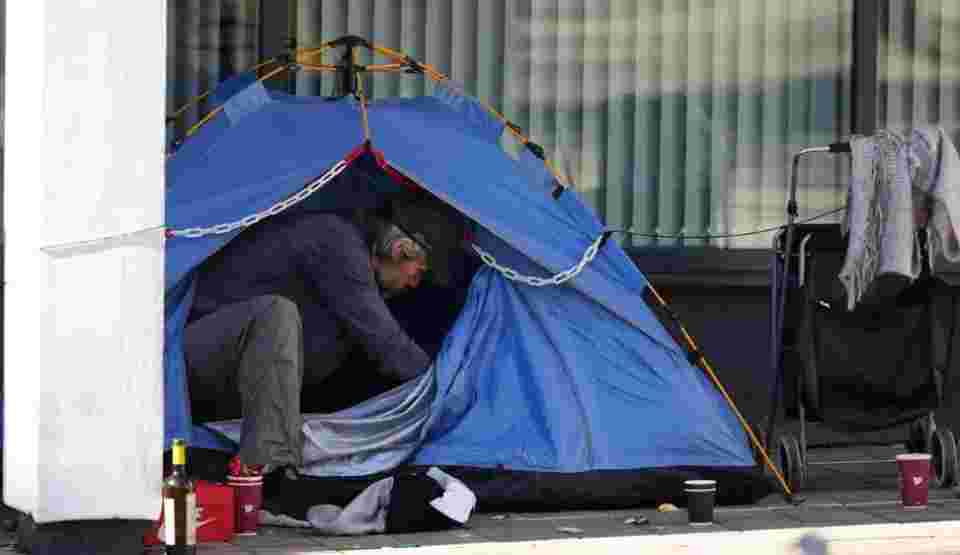
New research from the charity Crisis reveals that homelessness in England significantly exceeds what official government statistics indicate.
The study found that approximately 189,000 families and individuals experiencing severe forms of homelessness—including rough sleeping, sofa surfing, and living in tents—are missing from official counts. According to Crisis, this discrepancy exists because government data only captures people who formally declare themselves homeless to local authorities, which many fail to do.
Crisis estimates the total number of people facing the most severe forms of homelessness has reached around 300,000, representing a 20% increase since 2022.
Temporary Accommodation Crisis
The research, conducted by Heriot-Watt University, identifies unsuitable temporary housing as a major contributing factor to rising homelessness. The number of households placed in inadequate temporary accommodation has more than doubled from 19,200 in 2020 to 46,700 in 2024.
This category includes dangerous bed-and-breakfasts and properties located far from support networks. An additional 18,600 households are living in what the report terms “unconventional accommodation”—cars, sheds, and tents.
Many people counted in the Crisis research don’t qualify for government support under current eligibility thresholds, including those staying temporarily with friends.
Living in Limbo
Isra’s experience illustrates the human cost of inadequate temporary housing. Arriving in the UK from Iraq at age six in 2009, she spent most of her childhood moving between more than ten different temporary locations across London with her family.
The conditions were often deplorable—four siblings sharing a single bedroom in rat-infested properties. Isra recalls her mother sorting through rice to remove rat droppings from their food.
These unstable living conditions made maintaining friendships and concentrating on schoolwork nearly impossible for Isra and her siblings.
Calls for Urgent Action
Crisis chief executive Matt Downie emphasized the need for immediate government intervention. “No one should be forced to live in unsafe conditions, whether it’s children in poor-quality B&Bs or people having to sleep on the streets, in tents or in squats,” he stated.
Separate government data from last month indicated nearly 330,000 households faced homelessness risk in 2024, though this broader figure includes people in suitable temporary housing and some who ultimately retained their accommodation.
Government Response
The government has committed over £1 billion to homelessness services for 2025-26—a £316 million increase from the previous year. Last month, authorities announced an additional £84 million to prevent homelessness this winter.
Labour’s election manifesto promised a comprehensive homelessness strategy developed with mayors and councils nationwide. While some Labour officials have expressed concern about delays, the strategy is expected to launch before year’s end.
Crisis’s research included a survey showing 70% of local councils reported increased requests for homelessness assistance over the past year.
A government spokesperson responded: “Everyone deserves a safe place to call home, which is why we are investing more than £1bn in homelessness services and launching a homelessness strategy to tackle this issue. This is alongside accelerating efforts to tackle the root causes of homelessness by abolishing Section 21 ‘no fault’ evictions, and expanding access to safe accommodation.”