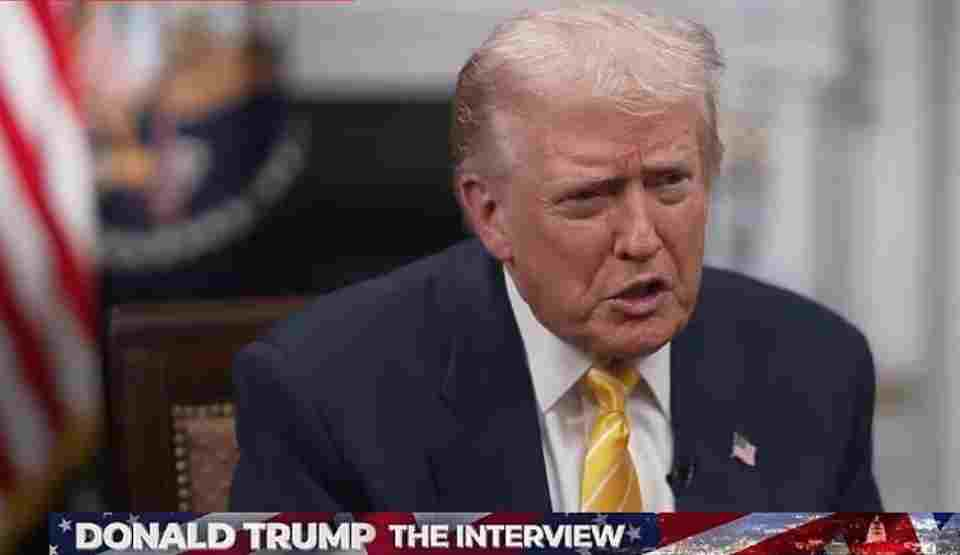
Donald Trump has confirmed plans to sue the BBC for up to $5 billion over its editing of a 2021 speech he delivered on the day of the Capitol riot, despite the broadcaster’s refusal to capitulate to his demands.
The British Broadcasting Corporation issued a personal apology to the US President on Thursday but maintained there was no legal basis for a defamation lawsuit over the documentary that Trump’s lawyers claim was defamatory.
Following the BBC’s rejection of his demands for a full retraction, Trump told GB News he felt an “obligation” to pursue legal action in a combative interview.
“I’m not looking to get into lawsuits, but I think I have an obligation to do it. This was so egregious,” he told GB News’ Bev Turner. “If you don’t do it, you don’t stop it from happening again with other people.”
Trump confirmed to journalists outside the White House on Friday that he would formally seek damages, stating: “We’ll sue them from anywhere between $1 billion and $5 billion, probably sometime next week. I think I have to do it.”
The President had given the broadcaster a Thursday 10pm deadline, threatening to sue unless he received a full retraction, grovelling apology and compensation offer for what he claims was a misleading edit shown to Panorama viewers of his speech before the January 6 Capitol riot.
During the same GB News interview on Friday, Trump also criticized London Mayor Sadiq Khan as a “terrible, terrible mayor,” calling him “a disaster” and “a nasty person,” while making unsubstantiated claims about areas in the British capital where “the police won’t go” and where Sharia Law is allegedly being exercised.
Trump’s explosive interview followed the BBC’s defiant refusal to accept his claim to legal damages. BBC insiders indicated they were bracing for a fierce reaction from the President.
In a letter to BBC staff seen by the Daily Mail, chairman Samir Shah acknowledged what “I fully understand has been a difficult week,” adding: “I’m aware there is sadness, anger and frustration in relation to what has happened in recent days and it is hard when the BBC is the focus of so much attention and news headlines.”
Shah confirmed he had written to President Trump “personally to extend my apology” but stated that “while the BBC sincerely regrets the manner in which the video clip was edited, we strongly disagree there is a basis for a defamation claim.” He thanked staff for their resilience during what “I fully appreciate have been challenging circumstances.”
The BBC admitted “that our edit unintentionally created the impression that we were showing a single continuous section of the speech, rather than excerpts from different points in the speech, and that this gave the mistaken impression that President Trump had made a direct call for violent action.”
The controversy has had catastrophic consequences for the corporation, with Director General Tim Davie and Deborah Turness, the head of BBC News, both resigning on Sunday.
Earlier this week, Trump remarked: “I guess I have to [sue]. Why not? They defrauded the public and they’ve admitted it. This is within one of our great allies, supposedly our great ally. That’s a pretty sad event. They actually changed my January 6 speech, which was a beautiful speech, which was a very calming speech, and they made it sound radical.”
He also told Fox News on Tuesday: “I think I have an obligation to [sue] because you can’t allow people to do that.”
Trump warned he would be “left with no alternative but to enforce his legal and equitable rights… including by filing legal action for no less than 1,000,000,000 dollars [£760million] in damages,” if the BBC failed to meet his demands.
When questioned about Trump’s legal threats, White House press secretary Karoline Leavitt told reporters the corporation is a “Leftist propaganda machine.”
As licence fee payers faced the prospect of a costly legal battle, the BBC’s legal team sent Trump a letter outlining five reasons why it believes there is no case to answer.
The letter argued that the documentary was restricted to UK viewers, caused Trump no harm as he was re-elected shortly after, and “was not designed to mislead, but just to shorten a long speech.”
Additionally, it noted the clip was just 12 seconds within an hour-long programme that also included voices supporting Trump, and that opinion on matters of public concern and political speech is heavily protected under US defamation laws.
Culture Secretary Lisa Nandy told BBC Radio 4’s Today programme the corporation’s editorial standards and guidelines were “in some cases not robust enough and in other cases not consistently applied.”