
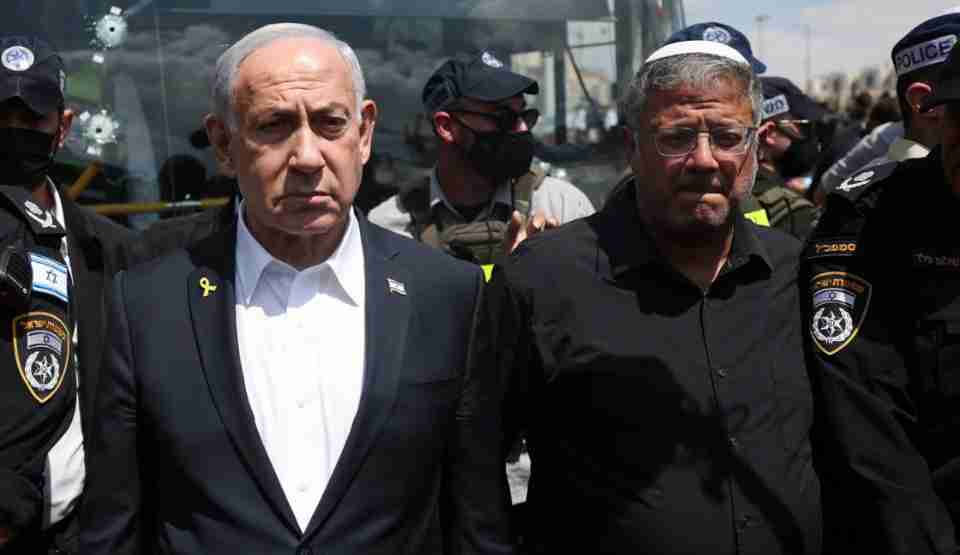
Security Minister Says Law Targets ‘Arab Terrorism’
Israeli lawmakers have advanced legislation that would dramatically expand the use of capital punishment for individuals convicted of killing civilians in terrorist acts, marking a significant shift in the nation’s approach to the death penalty.
The proposed legislation, championed by ultranationalist Knesset members, would potentially mandate execution for those convicted of murdering Israelis for political motivations. Security Minister Itamar Ben-Gvir, a hard-right figure, has stated the measure is designed to address “Arab terrorism” specifically.
Legal analysts suggest the law would not extend to Israelis or other Jewish individuals who kill Palestinians. The measure would also effectively eliminate the possibility of large-scale prisoner exchanges like those conducted to secure the release of hostages taken during the October 7 attacks.
Historical Context and Current Framework
While capital punishment exists within Israeli legal statutes, its application has been extraordinarily rare. The sole execution in the country’s history occurred in 1962, when Adolf Eichmann, a key Holocaust orchestrator, was put to death.
Technically, the death penalty remains available for high treason cases and under specific martial law conditions applicable to the Israel Defense Forces and West Bank operations. Yet these provisions have never been enacted and would necessitate complete agreement among a three-judge panel.

Details of the Proposed Legislation
The draft law specifies its application to individuals who murder Israelis motivated by “racism” and intent to “harm the state of Israel and the revival of the Jewish people in its land.”
Under the new framework, military court judges in the West Bank could impose death sentences based on majority vote rather than requiring unanimous consent.
The bill’s sponsor, Limor Son Har-Melech, lost her husband in a 2003 terrorist attack. The leader of the cell responsible later participated in the October 7 attacks and other operations. Two additional individuals connected to her husband’s death were freed in the recent Hamas ceasefire agreement.
“When the message is clear and unambiguous, the death penalty for terrorists transforms understanding and changes the framework entirely,” she stated. “No more imprisonment. No more negotiations. No more lenient sentences. Only capital punishment. The reasoning is straightforward: a deceased terrorist cannot rejoin the cycle of violence or be freed.”
She added: “No more compassion, no more hesitation. We are choosing life, and those who choose death will face the consequences.”
Political Dynamics
Son Har-Melech belongs to the Otzma Yehudit faction headed by Ben-Gvir, who has faced British government sanctions for “repeated incitements of violence against Palestinian communities.”
Following Monday’s initial passage by a 39-16 vote, Ben-Gvir distributed baklava in the Knesset chamber, seemingly referencing instances of Arabs sharing the sweet treat to celebrate attacks against Israel and Western targets.
His faction represents the ultranationalist settler movement in the occupied West Bank, where settler violence against Palestinians—including fatal incidents—has risen consistently in recent years. Palestinian attacks on settlers have also occurred, including the May killing of a pregnant woman and her unborn child by a Hamas-linked gunman.
Prime Minister Benjamin Netanyahu has reversed his position to support the bill’s advancement after Ben-Gvir threatened to pull his coalition support. Security agencies are believed to oppose the measure.
Opposition Concerns
Opposition lawmakers cautioned Monday that the legislation, which requires two additional votes to become law, could provoke increased terrorist activity and further damage Israel’s international standing.
Separate Development: US Military Plans
Separately, reports have emerged regarding American plans to construct a substantial military installation in Israel near Gaza to help maintain peace in the territory.
The facility, intended for international forces deployed in the enclave, carries an estimated price tag of $500 million. The project suggests the potential deployment of significant numbers—possibly thousands—of Arab and Muslim military personnel on Israeli territory.
Israel has historically minimized foreign organizational presence within its boundaries. The proposed base, if confirmed, would demonstrate President Donald Trump’s commitment to ensuring the long-term viability of his Gaza peace initiative, despite growing Israeli doubts about its prospects for success.