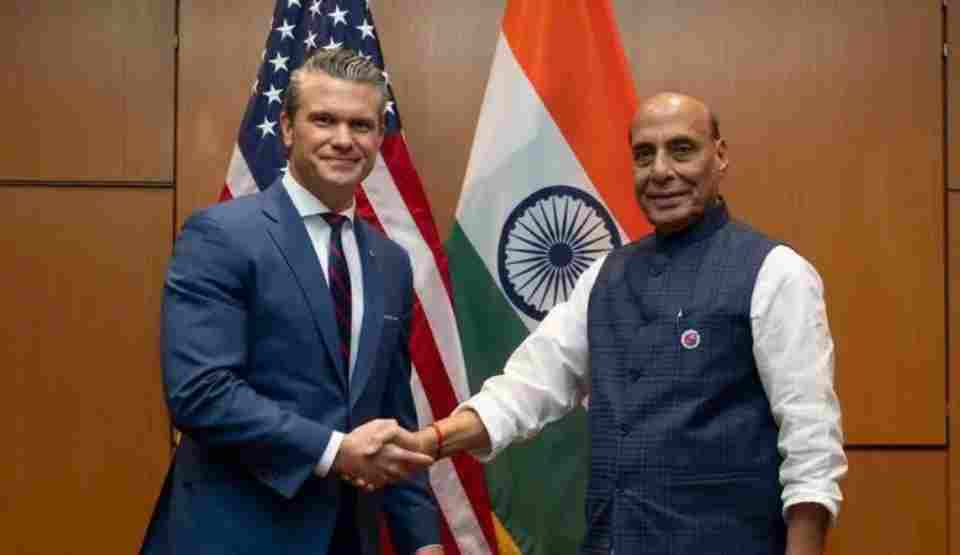
India and the United States have finalized a comprehensive framework agreement to strengthen defence collaboration for the coming decade, marking a significant milestone in their strategic relationship.
The announcement followed discussions between US Defense Secretary Pete Hegseth and Indian Defence Minister Rajnath Singh during their meeting in Kuala Lumpur. According to Hegseth, the agreement will bolster “coordination, information sharing and tech cooperation” while promoting “regional stability and deterrence.”
This defence accord emerges against a backdrop of strained economic relations, as both nations work to negotiate a trade agreement following President Donald Trump’s imposition of 50% tariffs on Indian goods, which includes an additional 25% penalty targeting India’s purchases of Russian oil and military equipment.
Singh emphasized the pact’s broader significance, describing it as “a signal of our growing strategic convergence” that will “herald a new decade of partnership.” He affirmed that defence cooperation remains “a major pillar” of bilateral relations and is “critical for ensuring a free, open and rules-based Indo-Pacific region.”

Delayed But Strategic
According to Pramit Pal Chaudhuri from the Eurasia Group think tank, the agreement was originally scheduled for completion between July and August of this year. However, the signing was postponed due to tensions arising from Trump’s public comments about his involvement in mediating the India-Pakistan conflict.
Chaudhuri noted that this latest pact continues a progression of agreements that have facilitated military interoperability, technology transfer, and defence industry collaboration between the two nations, with “further potential in all three areas.”
Evolving Defence Dynamics
The defence relationship between India and the US has intensified considerably in recent times. During Prime Minister Narendra Modi’s February visit to the United States, Trump indicated plans to significantly expand military equipment sales to India, potentially including advanced F-35 stealth aircraft.
However, India’s reliance on discounted Russian oil and its historical defence ties with Moscow have created friction with the Trump administration. While Russia remains an important arms supplier to India, its share of Indian defence imports has been declining as New Delhi pursues supply diversification and expands domestic manufacturing capabilities.
Recently, India has signaled willingness to increase both energy and defence procurement from the United States. The two nations are currently engaged in intensive trade negotiations, aiming to reach an agreement by November.